
✨ This article was AI edited. Editorial responsibility: Shed-Plans.biz.
Produced with AI. This article was artificially generated. Editorial responsibility: Shed-Plans.biz.
Erecting an agricultural storage building, livestock shelter, machinery barn, or workshop on agricultural land in England, Wales, Scotland, or Northern Ireland is subject to specific planning legislation distinct from residential domestic rules. Homeowners and farmers frequently ask: do you need to contact the local authority to construct a shed on a farm?
The short answer is: Almost always YES, but you may not need full planning permission. Even when an agricultural outbuilding qualifies under statutory Agricultural Permitted Development rights, you are legally required to submit a formal Prior Notification (28-Day Rule) application to your Local Planning Authority (LPA) before breaking ground.
UK Agricultural Permitted Development Rights: Part 6 Class A vs Class B
Under the Town and Country Planning (General Permitted Development) (England) Order 2015, Schedule 2, Part 6, agricultural land benefits from Permitted Development rights categorized strictly by agricultural unit holding size:
| Agricultural Holding Size | Permitted Development Category | Maximum Building Ground Area | LPA Notification Mandatory? |
|---|---|---|---|
| Large Farms: 5 Hectares (12.35 Acres) or More | Part 6, Class A (Large Agricultural Holdings) | Up to 1,000 sq metres (10,764 sq ft) | YES — Prior Notification (28-day rule) |
| Smallholdings: 0.4 to 5 Hectares (1 to 12.35 Acres) | Part 6, Class B (Small Agricultural Holdings) | Up to 1,000 sq metres (extensions/alterations only) | YES — Prior Notification / Full Planning |
| Small Parcels: Less than 0.4 Hectares (1 Acre) | NO Agricultural PD Rights | N/A (Treated under standard residential rules) | YES — Full Planning Permission Required |
What Is the 28-Day Prior Notification Procedure?
If your farm holding is 5 hectares or larger, you do not need to prepare a complex full planning application. However, you MUST follow the statutory Prior Notification procedure before ordering materials:
- Submit Form & Location Plan: Submit a Prior Notification application to your LPA with an OS location plan (1:2500 scale), site block plan, building dimensions, and material specifications.
- Pay Statutory Fee: Pay the standard Prior Notification fee (£96 to £120).
- The 28-Day Determination Clock: The LPA has exactly 28 days from the date of validated receipt to assess whether the proposed shed’s siting, design, and external appearance require formal approval.
- Commencing Construction: If the 28 days elapse and the council has not issued a written objection or request for further details, you have legal statutory approval to proceed with construction immediately.
Strict Exclusions: When Full Planning Permission Is ALWAYS Required
Even on a 100-acre commercial farm, agricultural Permitted Development does NOT apply if:
- Livestock Housing within 400m of Protected Dwellings: Any shed intended to house livestock or store livestock slurry/manure within 400 metres (1,312 feet) of the curtilage of a protected residential dwelling (a neighbour’s house) requires full planning permission.
- Within 25m of a Classified Trunk / Classified Road: Siting a building within 25 metres of the metalled surface of a classified trunk or A/B road requires full highway safety review.
- Excessive Height: Any agricultural building exceeding 12 metres (39.4 feet) in total height (or 3 metres if within 3km of an aerodrome perimeter).
- Non-Agricultural Diversification: Using the shed for commercial car repair, equestrian livery (horses for hire/hobby riding), holiday glamping storage, or retail farm shops requires formal change-of-use planning permission.
Permitted Development in Designated Rural Landscapes (AONB & National Parks)
If your agricultural land lies within an Area of Outstanding Natural Beauty (National Landscape), National Park, the Broads, or a World Heritage Site, specific additional constraints apply under Article 4 Directions:
- Ground Area Cap: The maximum ground footprint for a single new agricultural building under Part 6 Class A may be restricted to 500 square meters rather than 1,000 square meters.
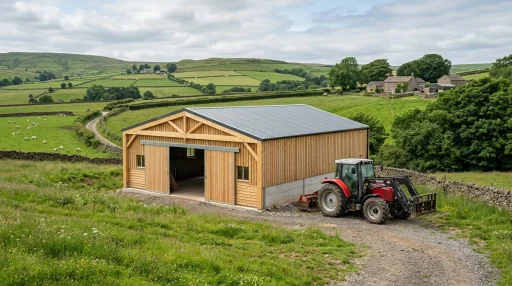
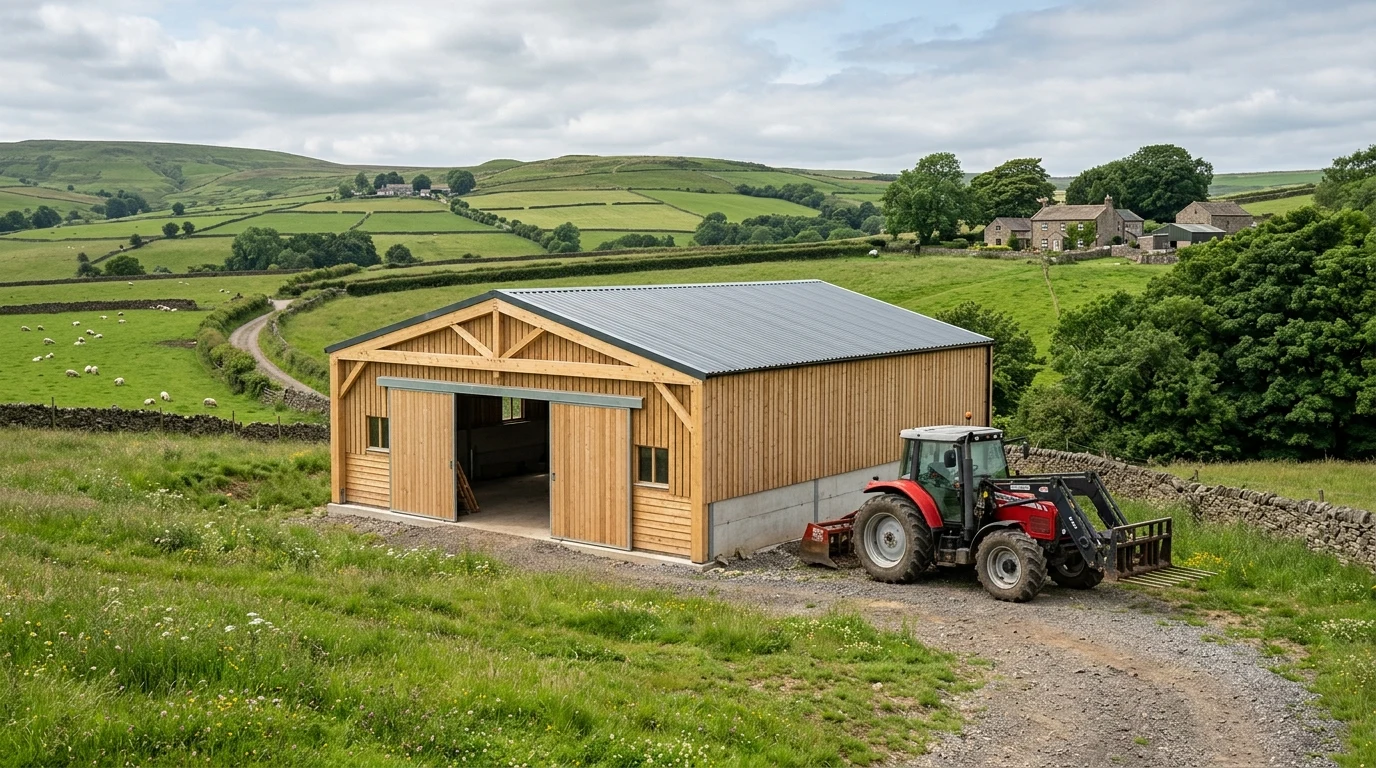
- Material Controls: Councils frequently require non-reflective natural timber cladding (larch or treated timber boarding) and dark olive green or slate grey roof sheeting to blend seamlessly with the rural landscape.
Step-by-Step Practical Roadmap for Farmers & Smallholders
Step 1: Confirm Genuine Agricultural Business Status
The LPA will require proof that your farm operates as a genuine commercial agricultural trade (holding an active Rural Payments Agency CPH County Parish Holding number) rather than an amenity lifestyle hobby paddock.
Step 2: Prepare Scale Drawings & Location Maps
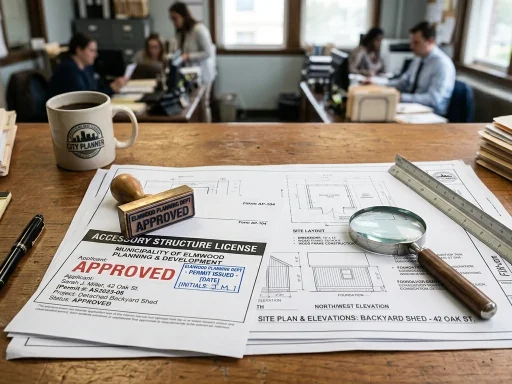
Obtain scaled elevations and a 1:500 block plan showing the proposed building footprint, ridge height, cladding materials (such as Yorkshire boarding and anthracite corrugated steel), and surface water drainage soakaways.
Step 3: Lodge the Prior Notification Online
Submit your application through the national Planning Portal or directly via your local council’s online planning portal, and record the exact 28-day statutory expiration date in your calendar.
Frequently Asked Questions (FAQ)
Q: Can I build a barn or shed on agricultural land without contacting anyone?
A: No. Erecting any building without submitting a Prior Notification or Full Planning application is an unlawful development. The council can issue an Enforcement Notice requiring complete removal and restoration of the land.
Q: Does keeping horses count as agriculture for shed Permitted Development?
A: No. Under UK planning law, keeping horses for recreational riding or livery is defined as an equestrian/amenity use, NOT agriculture (unless the horses are working farm draft animals). Equestrian outbuildings require full planning permission.
Q: How long do I have to complete construction once Prior Approval is granted?
A: You have exactly 5 years from the date of Prior Approval to complete the construction of the agricultural building.
Q: Can an agricultural shed later be converted into a residential house?
A: Yes, under Class Q Permitted Development, qualifying agricultural buildings can be converted into residential homes (up to 5 dwellings) subject to structural suitability and Prior Approval.
Explore our detailed companion guides on planning guidelines for every property owner, understanding exemption rules, and legal building limits explained.
Get our latest guides, news, and insights highlighted in your Google Search & AI Overviews.